Wednesday, October 19, 2011

New Pictures!

Hello readers!

I just wanted to let anyone who in the past has enjoyed my little slideshow of pictures on the right sidebar that I recently added a few more pictures to it! You can view it over there or below in this post. For anyone that wants to know specifics of the shoot they were taken with a Nikon D5000 with a Nikkor 55-200mm f/4-5.6 lens. I went out at about 10pm-midnight and setup with my tripod and a remote shutter cable to reduce noise in the pictures. They were taken with about 5-15 seconds of exposure depending on the picture. If anyone has any other questions or is interested in learning more about exposure shooting just leave a comment!


Thank you!


Read 'n' Seed 4: Third quarter of Trash Talk

In the third section of Trash Talk, the concentration is on how to reduce our use of paper and lumber by-products, thus reducing the need to cut down forests to satisfy the need. We all know trees produce oxygen for us to breathe, but did you also know they help clean the soil and air? A nine year study by the University of Delaware even produced results that said patients with a view of trees from their room went home earlier than those without a view of trees. Those are the natural and health benefits, but it doesn't stop there. One 50 year-old tree has an annual worth of $164,250 in energy savings. This includes oxygen production, pollution control, water protection, and erosion protection. Needless to say if you can do any of the following things I talk about, you will be making a huge contribution.

I previously mentioned briefly some uses you can have for salvaged lumber, such as building projects and in the garden. Some more specific examples would be to build a playground for your children, make bird houses as a fun project for your kids or in a classroom, build compost bins, or use for landscaping around the house and garden. Companies that produce paper can be responsible too. The Dutch paper needs are satisfied by 75% recycled paper, which in turn creates 75% less air pollution, 35% less water pollution, and uses 60% less water than creating paper from scratch. For every ton of paper saved, it saves 380 gallons of petroleum. Besides environmentally responsible, it can also be financially helpful. By saving paper only printed on one side and reusing it they can save thousands on paper needs a year. From a tourism standpoint forested areas can also be an attraction, for example the world famous Black Forest of Germany or the large Redwoods in California. Mail (envelopes, junk mail, newspapers) is a very large user of paper. Reusing envelopes can be easy and includes re-mailing the envelope, using it to store seeds, buttons, coupons, or other small knick-knacks, and you can also cut the sides and reuse both parts as scratch paper. Junk mail claims 62 million trees and 28 billion gallons of water per year. Not only does that sound like an incredible waste, it's even worse once you know that only 50% of junk mail is even ever opened. You can do your part here by calling, writing, or sending change of address notices to companies that are being wasteful and sending you unwanted letters or promotions. Newspapers can be layered between the ground and mulch to help protect against weeds. They can also be shredded up and used in animal cages, as well as for packing valuables. For all you ladies out there the
following tip sounds very helpful. If you have tall boots that sometimes get creases in them from tipping to the sides in the closet, you can simply wrap some magazines in rubber bands and stuff them inside to prevent those ugly creases! In one of my earlier posts we discussed what to do with plastic bags from your grocery store, but what about paper bags? One very interesting tip I found was that you can put peaches, pears, plums, and nectarines in paper bags to help them ripen! You could also find some fun projects for kids, using them as puppets or just decorating them to hang up somewhere, be creative! HERE is a site to give you some project ideas. Cardboard, although many people simply choose to recycle (which is fine!) can also serve secondary purposes such as being put down two layers thick to keep down weeds. Keeping on with the fun kid activities you can have them draw or paint on a piece of cardboard and then turn it into a fun puzzle!

These are just a few things to think about as you evaluate your use of paper in your life. I know I definitely will be paying more attention to the mail I receive and telling companies I don't need to get an advertisement once a week that I just throw out. Keep practicing all of the tips that I have posted so far and help spread the word! The more knowledge we spread the more effective our sustainable campaigns will become!


(Both photos used courtesy of Caleb Taplin Photography)

Saturday, October 8, 2011

Read 'n' Seed 3: Second quarter of Trash Talk

The second part of my book, Trash Talk, continued to offer tips on trying to create a better lifestyle for conservation. Straying from the first part which concentrated on specific items, the second quarter concentrates on actions and lifestyle changes you can take to have significant impacts on your effect on the environment.

If you are like me, you've worn glasses your entire life. Now, think about what you've done with all of your old pairs. Thrown away? Sitting in a closet somewhere? We now live in an era where contacts are taking over, and glasses are becoming less of a necessity for some. Not everyone is in a financial position to make this decision though. There are over 1.5 billion people in the world that are in need of optical assistance. By simply donating your old glasses laying around, they can find a match for your prescription and help someone see the world from a new perspective. Running, walking, and hiking are some of the most relaxing and simple activities one can do (weather permitting!). Simply taking a bag along with you to pick up trash can not only improve your surroundings, but can potentially improve others attitudes about helping out to if they see you picking up garbage beautifying the area. There are many great tips to conserve energy in this section as well, however many of them are things that are more useful if you consider them during the building/remodeling of a house. Consider choosing a clean energy like geothermal, which although expensive at first in the long run is not only responsible, but pays itself off. One that you can do right now is purchasing light bulbs that are responsible, using lower wattage bulbs in rooms that do not need extensive lighting to save energy. Coffee lovers (like me!) there are some great things you can do to lesson your impact. Consider buying a reusable filter, which can not only save you about $10 a year, and of course lessening waste from throwing away papers filters. You can also use the coffee grounds in compost or use them for mulch! The final area I will talk about from the section is water conservation. Clearly there are easy things you can do like not running the water while brushing your teeth, not taking unnecessarily long in the shower, etc., however you may not know a very clever trick to help save water when flushing the toilet. Some of you may not know the inner workings of the back of your toilet, but it is a pretty simple fill to the line every flush system. An easy way you can save water is fill a container full of water, put the cap on, and put it inside the back of your toilet, displacing that much water, and thus using that much less water per flush. This may not seem like much, but when you consider each person uses 9,000 gallons of water a year by simply flushing, it can add up quick, especially in large households.

All of these things are very small changes that create large scale returns. So, there are few legitimate reasons you could have for not trying to do some of these things in your everyday behavior. We all use energy, we all use water, and most of us drink coffee! These are just a FEW examples from this section, too. Thanks for reading, and if you haven't read the first installation, go check it out!

Tuesday, October 4, 2011

Eye Opener: CSPI

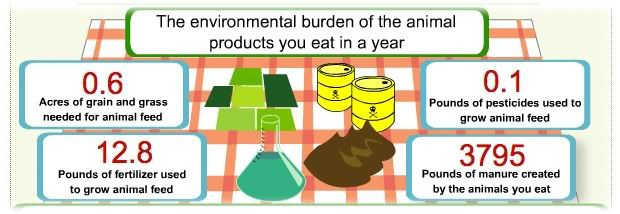
I decided to use the Eating Green Calculator for this activity. The calculator found that my impact is that I use .4 acres to feed animals, 8.6 pounds of fertilizer to grow feed, .1 pounds of pesticides to grow feed, and create 2323 pounds of manure from the animals I eat.

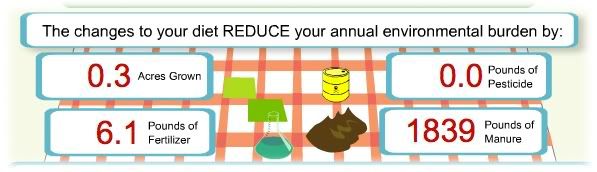
Based on the amounts of servings I was willing to cut out of my diet I would be able to reduced acre use by .3, leaving only .1 acres being used by me. Pesticides would not go down at all, but pounds of fertilizer would decrease by 6.1. Pounds of manure would drastically decrease by the amount of 1839. These results would also prevent potential diseases such as cancer, heart disease, and other illnesses related to these portion decisions.

I did decide to take the pledge, because it is such a simple lifestyle change that can have such a huge impact on the world. Simply changing portion sizes and food choices is something I have control over, while creating a new planet with resources or curing myself of heart disease or cancer would be much more difficult. Being sure the animals were raised in humane ways is also an important thing to look at, as many large chains have very disgusting practices for raising their livestock and other animals.

Read 'n' Seed 2: First quarter of Trash Talk

Everyone is at least somewhat with the three R's of the environment; Reduce, Reuse, and Recycle. Lesser known is a fourth R, that is even more important than the other three; Refuse. In part one of the book we are reintroduced to the R's, and then introduced to a plethora of ideas on how to execute them.

The first and most important R is Refuse. By refusing to buy products that are over-packaged, individually wrapped, or just plain irresponsible products you can have a huge impact on a company and their decisions. You may think you can't make a difference, but consider how demand for hybrid vehicles has risen because consumers have refused to buy irresponsible gas guzzling vehicles. Try to find alternative products such as those that are Eco-certified or bulk packaged to avoid unnecessary waste. Your average fruit or vegetable travels about 800 miles before reaching your produce center at the grocery store. Buy local and organic to avoid supporting all of those excess energy expenditures and packaging.

You can Reduce your waste by asking a couple questions while purchasing or while disposing of products. Will you be eating all of the food you are buying before it goes bad? If not, buy smaller portions more often to decrease waste. Reuse as much waste as you can by salvaging materials and creating products of out waste to not only save the environment, but save money. Recycle is pretty self explanatory. Set up a recycling pickup in your local area, or visit your local recycling center to drop off items or receive more information.

In the subsequent pages of the book after the four R's refresher the first part of the book is broken up into sections by item, listing the potential uses for items that you normally wouldn't think twice about throwing away. I chose the most conventional ones that relate to us to re-list here, although there are many, many more in the book. The first item is plastic bags, which if you are like me, slowly pile up in a cupboard until they are exploding out. These can be reused, can often be returned to their store of origin, or donated to thrift stores. Another common use I have found for them is as small garbage bags in your bathroom, laundry room, bedroom, etc. You can also use them to clean up after your dog on walks. These small changes can not only reduce throwing away these bags, but can save you money on garbage bags. The second item is toothbrushes. You may not know that you can order from companies where you order the toothbrushes, which are made from mainly recycled plastics, and then when done you can send them back to be recycled again. It is responsible companies such as these that you should support instead of multinational companies concentrated on profits. One item I found to have a very exciting secondary use was cereal bags. I enjoy a nice healthy bowl of cereal, but when you consider the waste produced by the box and bag, you may wonder how you can lessen the impact you are having. Consider cutting the bag in half and using it to line cookie sheets while baking, which will also save you money on buying wax paper. You can also wrap leftovers and foods to go in the bags. The next item can save money, create useful materials, or even give you a sense of goodwill; clothing. What do you do with your old clothing? Throw that ragged shirt and torn jeans away? Next time consider using them as dishrags, cleaning cloths, use them in the garden instead of buying weed blocking fabric, donating them to a secondhand/goodwill store, donating them to your local car mechanic or anyone who does lots of work while getting dirty! The possibilities are endless, so don't simply throw something away that has so much life still in it. The next item is somewhat of a no-brainer; containers. Your standard containers for butter, cool whip, mayo, cream cheese, coffee, peanut butter, milk, Crisco, etc. can all be used to store just about anything from art supplies, other foods, or miscellaneous household items. Next up is how you can salvage your old furniture. First is to take a look and decide do you really need new furniture? Often you can refinish or re-fabric an item and make it look brand new. If not, however, consider using wood to build new items such as a dog house, garden trellis, etc. If you are in need of items like this already, ask around the neighborhood and look for free wood pallets. These pallets are often made out of very valuable wood and can easily be broken down to create whatever you need! Reclaimed metal (such as what the LSBE building is partially constructed from) is also a very valuable material to reuse. Currently, every year we already recycle enough metals to save enough electricity to power Los Angeles for an entire year! The last note I would like to make from this chapter is a common misconception that your unused pharmaceuticals can be flushed down the toilet; do NOT do this, you are only putting those drugs into the water system and they will end up in the water, ground, etc. Instead, take them back to the pharmacy and they will take care of them for you.

This is all information that could create an incredible amount of monetary and environmental saving among the population. Use examples like this in your everyday life and create your own solutions as well. Don't forget to share what you discover you can do to help!

Wednesday, September 28, 2011

Eye Opener: Ecological Footprint

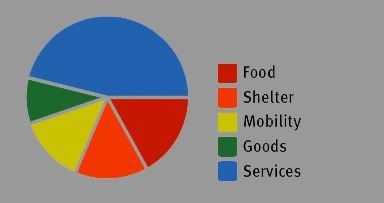
When I was doing the carbon footprint quiz, I was extremely surprised at how much of my footprint consisted of service oriented causes. I find this matching the results from another quiz I took, which had a large percentage dedicated to my electricity use as the largest part of my footprint. I would really like to try and improve in this area, as it would definitely produce the most evident results. I try to take the bus and carpool as much as I can, and it definitely shows since a very small piece of the pie consists of mobility causes. I also believe food is somewhere I can improve on, as I could easily buy more locally grown and whole foods rather than processed and packaged foods at the grocery store.
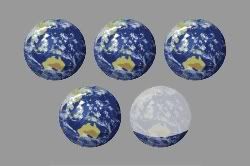
According to the summary, if everyone consumed at the same rate as me it would take 4.3 Earths to provide an adequate amount of resources for the population. So lucky some people are more responsible than me, and I will work on being more responsible with my consumption to decrease my footprint as much as possible. My consumption rate is considerably higher than what Wikipedia states to be the average at 1.4 Earths.

There are some pretty clear ways I can adjust my footprint. Mainly I will work on controlling energy use. Beyond that I can basically eat more environmentally friend foods, and try to reduce vehicle use even more than I already do. These are steps I know I can take pretty easily without having to make any major adjustments to my life, so it is not unreasonable to make changes that will benefit the Earth.

Tuesday, September 27, 2011

Read 'n' Seed 1: Trash Talk

Hello readers! The book I selected to read for the Read 'n' Seed project is titled Trash Talk. This book will teach you ways to save your community and our Earth. It takes everyday items that you would usually throw away and gives you ideas to reuse them.

I chose this book because it clearly relates to the theme of my blog, which is preventing contamination. Reusing items conceived to be trash with prevent these items from being dumped into lakes, rivers, landfills, and further contaminating our environment and ecosystems.

If you proceed to click HERE I have provided the author's website, where you can learn more about them, their message, and what drives them to do what they do. HERE is a link to Amazon where you can read some of the reviews for the book. Additionally HERE is a link to Barnes and Noble where you may also read some reviews.

The book is 188 pages long and is divided up into four sections, which is how I will be breaking up my posts. I really look forward to learning lots of new information and sharing it with all of you so we can all work on our bad habits of instinctively throwing items away!